


What to Expect During a Roof Replacement: A Northeast Ohio Homeowner's Guide
Date Posted:
April 6, 2026
Author:
Daryl Gentry
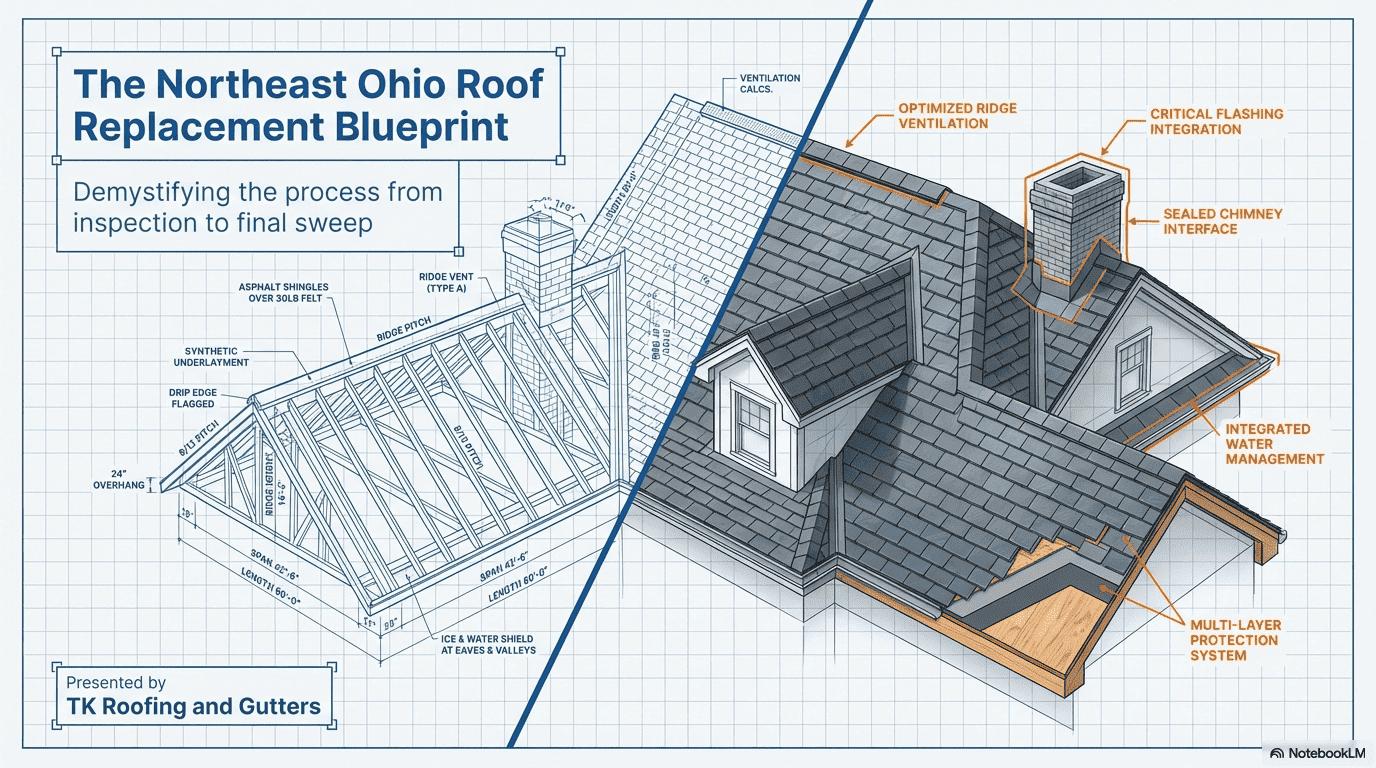
What to Expect During a Roof Replacement In Northeast Ohio
Roof replacement follows a structured, step-by-step process from material delivery through final cleanup, giving homeowners a clear and predictable experience from start to finish. Knowing each step removes the anxiety before your crew ever arrives.
Most homeowners in the Akron and Canton area get a complete their roof replacement in a single day. The process moves from material delivery through tear-off, deck inspection, installation, and a thorough cleanup that leaves your property exactly as the crew found it.
Ohio's freeze-thaw climate adds one step that national guides often miss: a close look at the plywood decking beneath your old shingles for hidden moisture damage. Working with a certified, experienced local contractor means that step doesn't catch anyone off guard.
This guide walks you through the complete process and explains what to watch for at each stage. If you're also thinking about costs, see our detailed breakdown of how to reduce roof replacement costs in Northeast Ohio.
The Day Before: Material Delivery and Property Setup
The roof replacement process begins with material delivery and property preparation before installation starts. Your roof replacement begins the afternoon or morning before installation, when materials arrive and your property is prepared for the crew.
A professional contractor schedules delivery close to the project date to protect materials and signal an organized operation.
Expect bundles of shingles, underlayment rolls, and other components staged near your home. Before work starts, the crew covers flower beds, landscaping, and ground surfaces with protective tarps. This shields your plants and lawn from falling debris and creates organized drop zones for torn-off materials.
Your job the day before is simple. A few key steps:
- Move vehicles out of the driveway.
- Clear patio furniture and outdoor items from around the house perimeter.
- Remove or secure fragile wall decor: picture frames, mirrors, and shelving items on exterior-facing walls.
- Cover or move items stored in the attic if they are near the roofline.
Roofing creates vibration through the structure. It won't damage your home, but a loose frame on an exterior wall can shift. At TK Roofing and Gutters, my crew reviews property conditions before any work begins, noting landscaping, utility boxes, and anything requiring extra protection.
The goal is to leave your property looking exactly as it did before we arrived.

Tear-Off: The Noisiest Part of the Process
Tear-off marks the most active phase of the roof replacement process as crews remove existing materials down to the deck. Tear-off is the removal of your old shingles, underlayment, and flashing down to the bare wood deck and it is the loudest, most active phase of the entire replacement. Our crews work quickly and systematically, starting at one section and moving across the roof surface.
Expect steady noise throughout this phase: scraping, hammering, and debris dropping into the trailer or dumpster staged in your driveway. Roof replacement noise typically reaches 80 to 90 decibels, comparable to a lawnmower running continuously.
A few things to plan for:
- If you work from home, consider relocating for the morning.
- Keep pets and young children inside or off-site. Dogs especially react to the vibration and overhead noise.
- Let your neighbors know in advance. The noise is noticeable from adjacent properties.
Tear-off also includes removing old flashing from chimneys, pipe boots, and valleys. Our experienced crews dispose of old shingles and roofing materials properly. Most asphalt shingle waste goes to designated construction facilities, not standard landfills, because of the petroleum content in asphalt.
The tear-off phase typically runs two to four hours on a standard-sized roof. Your home is not exposed during this time. A professional crew manages the pace so installation begins the same day.
Roof Deck Inspection: What Ohio Homes Often Reveal
Roof deck inspection reveals structural issues that must be addressed before new materials are installed. The roof deck, the plywood or OSB (oriented strand board) sheathing beneath your shingles, is fully exposed after tear-off, and this inspection is where Northeast Ohio homes frequently surprise homeowners.
This is often the first time anyone has seen that wood in 15 to 25 years.
Here is where Ohio's climate matters. Freeze-thaw cycles, the repeated freezing and thawing Northeast Ohio experiences throughout winter and early spring, push moisture beneath aging shingles over time. Ice dams along roof eaves force water backward under the roofing system. That moisture reaches the deck.
The result: soft spots, delamination, and dark staining that only become visible once the old roof is stripped away.

This pattern shows up in homes across our service area. The older historic homes in West Akron and Kenmore frequently carry decades of ice dam intrusion in the decking that was never visible from outside.
Newer developments in Jackson Township and Green tend to show cleaner decks, but steep-pitch sections and north-facing slopes still warrant close inspection. TK Roofing and Gutters has worked across this entire region since 2003, and local crew experience is what makes the difference at this stage.
At TK Roofing and Gutters, we inspect every exposed board before installation begins. Damaged or compromised sections are replaced with new sheathing before any new materials go down.
This protects your new roof's manufacturer warranty and ensures a solid, stable substrate for the entire system above it.
According to This Old House's Ohio roof cost data, hidden structural repairs during replacement typically add $600 to $2,200 to a project. Setting aside a small contingency keeps you financially prepared if the deck needs attention.
Underlayment, Drip Edge, and Ice Protection
A roofing system relies on protective layers beneath the shingles to prevent water intrusion. Once the deck passes inspection, installation begins with underlayment, drip edge, and ice-and-water shield, the foundational components that protect your home before a single shingle goes down.
In Northeast Ohio, this layer does the most critical work in the entire system.
Each component plays a specific role:
- Ice and water shield: A rubberized membrane applied first along the eaves and in valleys. It seals tightly against the deck and self-seals around nails, preventing water infiltration even if ice dams force water backward under the shingles. In our climate, this layer is not optional.
- Synthetic underlayment: Applied across the remaining roof surface as a water-resistant barrier against wind-driven rain and a secondary line of defense if any shingle above it fails.
- Drip edge: A metal strip installed along the roof's edges that directs water away from the fascia board and into the gutters rather than behind them.
GAF, one of North America's largest roofing manufacturers, requires certified contractors to install the complete roofing system, not just the shingles, to qualify for their strongest warranty coverage. As a GAF Certified Contractor, we install each component to manufacturer specification on every project.
Shingle and Flashing Installation
Shingle and flashing installation forms the primary barrier that sheds water and prevents leaks. Shingle installation begins with starter shingles along the eaves and rakes, then progresses upward in overlapping rows, and flashing is installed concurrently at every roof penetration and transition point.
This is the most visible stage of the replacement and the one most directly tied to long-term leak prevention.
Here is something most homeowners don't know: most leaks in new roofs occur at flashing points, not in the shingles themselves. Flashing, the metal pieces installed around chimneys, skylights, pipe boots, and in roof valleys, requires precise seating and sealing at every transition. A shingle can fail and shed water to the course below it.
A poorly seated flashing piece has nowhere to redirect that water. Experienced crews replace all flashing rather than reusing old pieces that may be corroded or improperly seated.
CertainTeed Select ShingleMaster certification, held by TK Roofing and Gutters and earned by fewer than 3% of roofing contractors nationally, requires demonstrated installation standards that directly affect leak prevention at these critical transition points.
Shingle rows are applied with consistent nail placement per manufacturer specifications. Every course overlaps the one below it, directing water down and away from the roof surface.
Hip and ridge cap shingles finish the peak lines, sealing the topmost edges and completing the weather barrier.
Cleanup, Magnetic Sweep, and Final Walkthrough
A roof replacement ends with a structured cleanup process that restores safety and property condition. Cleanup is not an afterthought. It is a structured final phase that determines whether your property is safe for your family after the crew leaves. At TK Roofing and Gutters, cleanup follows a defined sequence every single time.
Here is what that sequence looks like:
- All torn-off materials and debris are loaded and removed from the site.
- Tarps protecting the landscaping come down.
- The crew runs a magnetic sweeper across the yard, driveway, and perimeter twice. Roofing nails scatter widely during tear-off and a single pass misses them. Two passes is the standard.
- A final walkthrough is completed with the homeowner before the crew leaves.
The final walkthrough is your opportunity to inspect the completed work. Walk the perimeter. Look at ridge lines, flashing points, and gutter condition. Ask questions. A reputable contractor welcomes this.
Debora Dolfi, a TK Roofing and Gutters customer, said it plainly: "The yard was spotless when they left. The new roof is beautiful and the price was just right!"
That standard, a yard you can walk the next morning without worry, is what cleanup should look like on every job.
How Long Does a Roof Replacement Take in Northeast Ohio?
Roof replacement timelines depend on roof size, complexity, and weather conditions. Most residential roof replacements in the Akron and Canton area are completed in a single day, from material staging in the morning through final cleanup before evening.
That is the realistic expectation for a standard-sized home with a typical roof configuration, not the exception.
A few factors that extend the timeline:
- Multiple roof valleys or a steep pitch
- Two or more stories
- A tear-off that involves removing more than one existing layer of shingles
- Significant deck damage requiring sheathing replacement
- Weather delays, the primary wildcard in Northeast Ohio
Tim McMahon, a TK Roofing and Gutters customer, noted: "TK did a new roof and gutters for me. They did it in two days, even though we got some steady bouts of rain. It was a complete tear off with two layers of shingles. Daryl, the owner, was on top of things the whole way."
The broader timeline from first inspection to project completion typically runs one to two weeks when material ordering, and scheduling are factored in.
The day of the roof replacement itself is the short part.
What a Good Roof Replacement Leaves Behind
A completed roof replacement delivers long-term protection through proper installation and warranty coverage. It delivers more than new shingles. It delivers a documented, warranted system backed by workmanship coverage that protects your investment for years. This is where contractor selection matters most, and where the difference between a certified local contractor and a cut-rate crew becomes clear.
The industry standard for workmanship warranties runs 5 to 10 years. TK Roofing and Gutters provides a 20-year workmanship warranty, double the coverage most Akron-area contractors offer. That warranty reflects confidence in the installation, not just confidence in the materials.
Manufacturer warranties from GAF, CertainTeed, and Owens Corning cover the shingles and roofing components. Workmanship warranties cover how those components were installed. Both matter. A failed installation that voids a manufacturer warranty leaves a homeowner with coverage on neither side.
When your project is complete, you should receive:
- Written workmanship warranty documentation with the contractor's name and coverage period
- Manufacturer warranty registration completed on your behalf
- Contractor license and insurance information for your homeowner records
Your new roof protects the home, the people inside it, and the investment you have made in both. Knowing the installation was done right by a certified, locally accountable team is what makes that protection real.

Roof Replacement Process FAQs
Can I stay home during a roof replacement?
Yes. Most homeowners stay home, but the noise and vibration are significant and worth planning around. Roof work produces steady hammering and foot traffic that travels through the home's structure, reaching 80 to 90 decibels. If you work from home, plan to relocate for at least the morning tear-off phase. Pets and young children are generally more comfortable away from the property during active work. Your presence is helpful for questions but is not required.
What happens if they find damaged wood under my old shingles?
Damaged roof decking found during tear-off must be replaced before new materials are installed, and in Northeast Ohio, this is more common than most homeowners expect. Freeze-thaw cycles and ice dams push moisture beneath aging shingles over years, leading to soft spots in the plywood or OSB sheathing. A reputable contractor identifies and replaces compromised sections immediately, charging per sheet of new decking. Setting aside a contingency of $500 to $1,000 is a reasonable precaution for older homes in our region.
How long does a roof replacement take in Northeast Ohio?
Most residential roof replacements in the Akron and Canton area are completed in a single day by an experienced crew. Larger roofs, steep pitches, or tear-offs involving two or more existing layers may extend the project into a second day. Weather is the most common cause of schedule adjustments. The full process from inspection to completion, including permits and material scheduling, typically takes one to two weeks.
How do I know if a roof replacement was done correctly?
A properly completed roof replacement is verifiable through a final walkthrough, written warranty documentation, and visible quality at flashing points and ridge lines. Walk the perimeter with your contractor when the job is complete. Inspect flashing around chimneys and pipe boots, the most common points of future leaks when installed poorly. Confirm your workmanship warranty is in writing with the contractor's name and coverage period. Consistent shingle coursing, sealed ridge caps, and clean drip edges are visible signs of quality installation.
Ready for Your New Roof?
A roof replacement is one of the most significant investments a homeowner makes, and most of the anxiety around it disappears when you know what to expect.
The replacement process has a clear sequence: materials arrive, tear-off begins, the deck is inspected and prepared, the roofing system is installed layer by layer, and cleanup leaves your property clean and safe.
In Northeast Ohio, the deck inspection step matters more than national guides acknowledge. Freeze-thaw damage is real, it is common in older homes, and a crew that knows what to look for protects both your investment and your warranty coverage.
TK Roofing and Gutters has been serving Akron, Canton, and surrounding Northeast Ohio communities since 2003. As a GAF Certified Contractor, Owens Corning Certified, and CertainTeed Select ShingleMaster, we back every installation with one of the longest workmanship warranties in the roofing industry.
Most of our roof replacements are completed in a single day. Cleanup includes a double magnetic sweep of your yard. And we walk every finished roof with you before we leave.
Ready to get started on your roof replacement? Call us at 330-858-2616 or request a free inspection. No pressure, just clear answers about the condition of your roof and what the process looks like for your specific home.

Call Us
(330) 858-2616
Email Us
info@tkroofingandgutters.com
Visit Our Office
3256 South Main St. Akron, Ohio 44319

Hours
9am - 5pm
Monday to Friday
Closed Holidays
Monday to Friday
Closed Holidays
Related Posts
 How Do I Tell If a Roofer Is Pushing Replacement When Repair Is Enough?
Learn the four tests that separate a legitimate replacement recommendation from scope inflation, and why who pays your roofer matters as much as what they find.
Read Article
 My Roof Is 15 Years Old and I Have One Leak: Repair or Replace?
A single leak at 15 years usually traces to failed flashing, not a dying roof. Here is how Akron homeowners can tell repair from replacement with confidence.
Read Article
Search


