


Should I Replace My Gutters When I Replace My Roof?
Date Posted:
July 7, 2026
Author:
Daryl Gentry
By Daryl Gentry, Owner — TK Roofing and Gutters, LLC | Serving Northeast Ohio since 2003 | 356 S Main St, Akron, Ohio 44319 | 330-858-2616 |
Replace your gutters with your roof when they are aged, failing or attached with spike-and-ferrule hardware. Keep them when they are seamless, sound and properly pitched on hidden hangers. The decision is not always required — but in Northeast Ohio, the answer is yes more often than homeowners expect.
Northeast Ohio winters are consistent with the Great Lakes regional average of 42 freeze-thaw cycles per year documented by GLISA at the University of Michigan — and that cycling shortens gutter lifespan and accelerates the failure of aging attachment systems faster than in milder markets. The question is whether your specific gutters — given their age, condition, hardware and how they will interact with your new roof's drip edge — are worth keeping. At TK Roofing and Gutters, we assess every gutter system before we make a recommendation. Sometimes we tell homeowners to keep them.
For a complete guide to gutter sizing, materials and proper installation in this climate, see Gutters: What Northeast Ohio Homeowners Need to Know.
Quick Answer
- Replace gutters with your roof when they are more than 15 to 20 years old, attached with spike-and-ferrule hardware, sagging, showing fascia rot or made of sectional construction.
- Keep gutters when they are seamless aluminum, secured with hidden hangers, less than 15 years old and properly pitched with no fascia damage.
- New drip edge changes the overlap geometry at the eave — if old gutters are reinstalled after the new drip edge, the back lip may fail to tuck behind it, sending water behind the gutter rather than into it.
- Spike-and-ferrule systems — standard through the 1990s — rarely survive removal and reinstallation cleanly in a freeze-thaw climate.
- Replacing both at the same time puts the entire water management system under one warranty with one contractor.
Keep vs. Replace: A Decision Framework
Before the signals, here is the framework in a single reference.
A contractor who walks your roofline and checks each of these factors honestly is giving you information. One who recommends replacing gutters on every job without looking is not.
Five Reasons Replacing Both Is Usually the Right Call
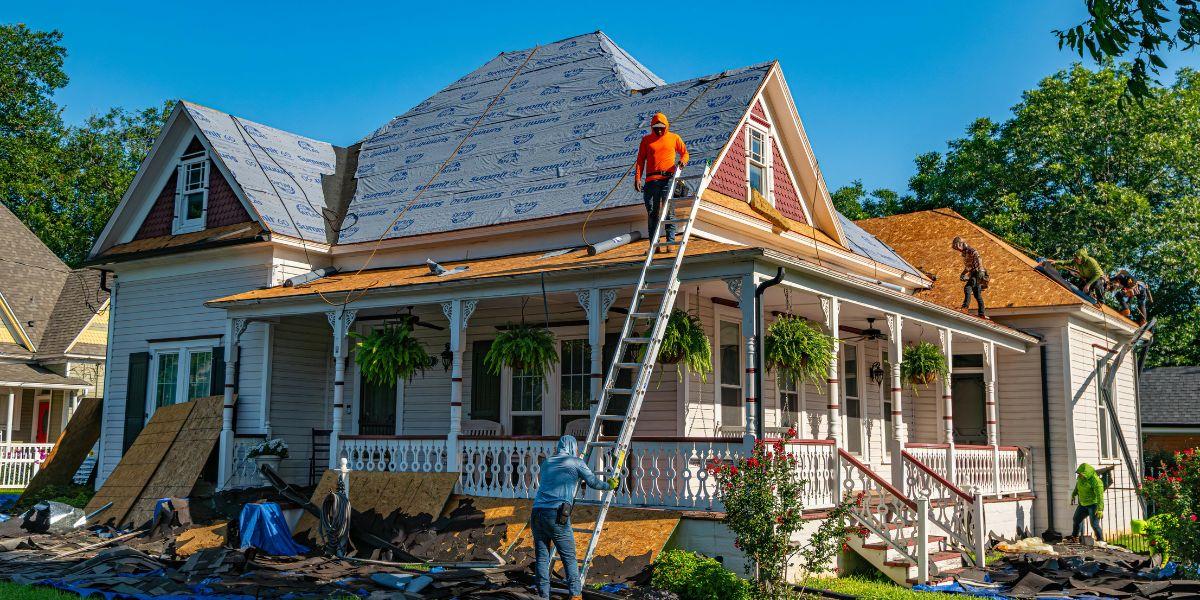
Replacing gutters during a roof replacement makes the most practical sense when the existing system is old, attached with failing hardware, misaligned with the new drip edge, damaged or made of sectional construction that freeze-thaw cycling has already compromised.
Here are the five reasons we see most often.
Age of 15 to 20 years or more. Aluminum gutters last 20-plus years under normal conditions, but the Great Lakes region averages 42 freeze-thaw cycles per year, and Northeast Ohio sits squarely within that range. Those cycles feed ice dam formation along the eave, and ice dams put compressive stress on aging gutter systems that accelerates hanger fatigue and seam failure. A gutter system installed in the mid-2000s or earlier is approaching or past the point where removal and reinstallation is a reasonable gamble. If the roof is being replaced because it is 20 years old, the gutters installed at the same time are 20 years old too.
Spike-and-ferrule attachment. Homes built through the 1990s commonly used spike-and-ferrule gutter systems — a horizontal spike driven through the gutter face and into the fascia with a metal tube (ferrule) as a spacer. Hidden hangers, which screw directly into the fascia from inside the gutter trough, replaced spike-and-ferrule as the standard method through the late 1990s and into the 2000s. The reason the old system fails matters: over decades of freeze-thaw cycles, the spike hole in the fascia stretches. When gutters are removed for roofing work and reinstalled into those stretched holes, the attachment is compromised from day one. A spike-and-ferrule system on a home built before 2000 is not a system worth reinstalling.
Drip edge overlap geometry. A new roof installs a new drip edge — the metal flashing along the eave that directs water off the roof deck and into the gutter. The critical relationship is overlap: the gutter's back lip must tuck behind the lower edge of the drip edge so water flows into the gutter, not behind it. New drip edge changes the geometry of that tuck. If old gutters are reinstalled after the new drip edge is in place, the back lip may no longer sit far enough behind the drip edge's lower edge — and water follows the drip edge and runs behind the gutter, saturating the fascia and the soffit over time. Installing new gutters after the drip edge is set ensures the overlap relationship is correct from the start.
Sagging, fascia rot or pulling away. Any of these signals means the attachment has already failed or the wood it attaches to has been compromised. Reinstalling gutters to a rotted fascia board is not a repair — it is a temporary hold. Fascia repair is work that happens during a roofing project anyway, making gutter replacement the natural companion.
Sectional construction. Sectional gutters — assembled from pre-cut pieces with seams at every joint — are already compromised compared to seamless systems. Removal and reinstallation stresses every joint and sealant point. In a freeze-thaw climate, those stressed seams fail faster after reinstallation than they would have undisturbed.
For why seamless systems outperform sectional alternatives in Northeast Ohio conditions, see Benefits of Seamless Gutters.

When Your Existing Gutters Are Worth Keeping
Gutters in solid condition — seamless aluminum, secured with hidden hangers, properly pitched at approximately one quarter inch of slope per 10 feet of run, with no sagging and no fascia rot — can be worked around during a roof replacement and reinstalled without compromising their remaining service life.
The honest answer is that not every roofing job requires new gutters. If your gutters are seamless aluminum, less than 15 years old, on hidden hangers and hanging level and tight with no visible damage or staining on the fascia or soffit behind them, a careful roofing crew can work around them. We use tarps to protect gutter systems during tear-off and take extra care around the eave line. When the job is done, we verify the new drip edge is properly integrated with the existing gutter profile before we leave.
Any contractor who tells you otherwise without assessing the condition of your specific system first is not giving you straight advice. For what transparency and honesty look like from a reputable roofing contractor, see what makes a roofing company trustworthy.
Keep your gutters well maintained during their extended service life. See How Often Should You Clean Your Gutters? for timing and what to inspect at each cleaning.
What Are the Benefits of Replacing Gutters and a Roof Together?
Replacing gutters during a roof replacement puts the entire water management system under one contractor's warranty — eliminating the finger-pointing that happens when a leak develops at the roof-gutter interface and two separate companies are involved.
The accountability argument is the most important one. When the roof and gutters are installed by the same contractor in the same project, there is no ambiguity about who is responsible if water gets behind the fascia or pools at the foundation. One contractor owns the full system from ridge to downspout extension.
The order of operations also matters. During tear-off, gutters either come off or get worked around with protective tarps. The new drip edge goes on as part of the roofing installation. Then new gutters are installed after the drip edge is set — ensuring the overlap geometry is correct from the first day. Scheduling two separate projects with different contractors makes this sequencing harder to control.
On the cost side, industry estimates put the labor savings at 10 to 20 percent compared to two separately mobilized projects, because the crew and equipment are already at the roofline. A second project also carries its own deposit and mobilization costs that a combined job avoids.
For what warranty and payment terms should look like when combining both projects, see Understanding Roofing Estimates and Contracts.
Frequently Asked Questions
Should I always replace my gutters when I replace my roof?
Replacing gutters during a roof replacement is not always required, but it is the most practical choice when gutters are more than 15 to 20 years old, attached with spike-and-ferrule hardware, showing sagging or fascia rot or made of sectional construction. Gutters on hidden hangers in solid condition can be kept. A qualified contractor should assess the system honestly before recommending replacement — and any contractor who recommends replacing gutters on every job without looking at the condition of your specific system is not giving you straight advice.
What are spike-and-ferrule gutters and why do they matter during a roof replacement?
Spike-and-ferrule gutters use a horizontal spike driven through the gutter face and into the fascia board — a system that was standard through the 1990s and replaced by hidden hangers because spike holes stretch over time and the attachment fails progressively. In Northeast Ohio, where winters align with the Great Lakes regional average of 42 freeze-thaw cycles per year, spike-and-ferrule systems on homes built before 2000 rarely survive removal and reinstallation cleanly. If your home was built before 2000 and the gutters are original, assume spike-and-ferrule until a contractor confirms otherwise.
Do gutters have to be removed when replacing a roof?
Gutters do not always have to be removed during a roof replacement — a careful crew can work around seamless gutters in good condition using eave tarps and protective staging, then verify the drip edge overlap relationship before leaving. Gutters that are old, attached with spike-and-ferrule hardware or in poor condition are typically removed as part of the project. When gutters come off, the roofing work proceeds more cleanly and the new gutters can be installed after the drip edge is set, ensuring correct alignment from the start.
What is the right order — roof first or gutters first?
Roof replacement comes first because the new drip edge, installed as part of the roofing job, determines the overlap geometry that the gutter back lip must tuck behind. Gutters installed before the new drip edge is in place may not align correctly with it — which is exactly the condition that sends water behind the gutter rather than into it. The correct sequence is tear-off, new drip edge, then gutter installation or reinstallation. This is why combining both projects with one contractor produces the cleanest result.
Does insurance cover gutters when a storm replaces a roof in Ohio?
When storm damage replaces a roof through an insurance claim in Northeast Ohio, gutters damaged in the same weather event are often part of the same claim — but only if the damage is documented and included in the adjuster's scope of work. Hail and high-wind events that damage shingles frequently dent aluminum gutters and compromise seams in the same storm. Ask your contractor to document gutter damage during the inspection, before the adjuster's visit, so the full scope of storm-related damage is captured in the claim. For patterns to watch for when storm contractors approach after a hail or wind event, see roofing scams to watch for in Northeast Ohio.
What are the cost benefits of replacing gutters and a roof at the same time?
Replacing gutters and a roof with one contractor reduces total labor cost by an estimated 10 to 20 percent compared to two separately mobilized projects, because the crew and equipment are already at the roofline with no separate mobilization expense. It also puts the full water management system under one warranty, eliminating ambiguity about who is responsible if a problem develops at the roof-gutter interface. A second project carries its own deposit and mobilization costs that a combined job avoids. For what fair payment terms look like when combining projects, see What Is a Fair Deposit for a Roofing Job?

The Right Call Depends on What Is Actually Up There
Replacing your gutters when you replace your roof is not always necessary. But it is the right call more often than homeowners expect — especially in Northeast Ohio, where aging housing stock, spike-and-ferrule attachment systems and winters consistent with the Great Lakes regional average of 42 freeze-thaw cycles per year make aging gutters a worse candidate for reinstallation than they would be in a milder market.
At TK Roofing and Gutters, we assess the gutter system on every roof inspection before we make a recommendation. If they are in solid condition on hidden hangers, we say keep them. If they are not, we explain exactly why and what replacement would add to the project. You talk to Daryl — not a call center — and the recommendation is based on what we actually see, not a standing policy to upsell gutters with every roof.
Call us at 330-858-2616 to schedule your free roof and gutter inspection.
For everything to consider when hiring a contractor, see Hiring a Roofing Contractor in Northeast Ohio: The Complete Guide.

Call Us
(330) 858-2616
Email Us
info@tkroofingandgutters.com
Visit Our Office
3256 South Main St. Akron, Ohio 44319

Hours
9am - 5pm
Monday to Friday
Closed Holidays
Monday to Friday
Closed Holidays
Related Posts
 Gutters: What Northeast Ohio Homeowners Need to Know
Northeast Ohio's freeze-thaw cycles, lake-effect snow, and mature tree canopy are harder on gutters than most climates. Learn what size, material, and maintenance your home actually needs.
Read Article
 Do Gutter Guards Really Work?
Gutter guards block debris, eliminate ladder climbs, and stop water damage. Learn which protection system fits your Akron-area home from local experts.
Read Article
Search


