


Gutters: What Northeast Ohio Homeowners Need to Know
Date Posted:
June 1, 2026
Author:
Daryl Gentry
By Daryl Gentry, Owner — TK Roofing and Gutters, LLC | Serving Northeast Ohio since 2003 | 3256 S Main St, Akron, Ohio 44319 | 330-858-2616
Gutters are the part of your home most homeowners ignore until something goes wrong — and in Northeast Ohio, something goes wrong faster than almost anywhere else in the country.
The region's combination of lake-effect snow, spring storms, and 40-plus freeze-thaw cycles per winter puts more stress on a gutter system than most climates ever will. A system that works fine in Columbus or Cincinnati can fail in Akron in three years flat.
Northeast Ohio's freeze-thaw cycles, lake-effect snowfall, and mature urban tree canopy create gutter stress conditions most of the country never encounters. Here, the right system means seamless aluminum construction, the correct size for your roof's pitch and square footage, proper pitch and hanger spacing rated for ice loads, and twice-yearly cleaning timed to the region's spring seed drop and fall leaf volume. Getting these details right is the difference between a system that lasts 20-plus years and one that pulls away from your fascia after the first hard winter.
TK Roofing and Gutters installs seamless gutter systems across Northeast Ohio — 5-inch and 6-inch — and has been doing it since 2003. This guide covers everything you need to make a smart decision about your gutters.
Key Takeaways About Gutter
- Gutters protect your foundation, fascia, siding, and roof edge by directing water away from your home's structure.
- Northeast Ohio's 40-plus annual freeze-thaw cycles and 42 inches of average annual snowfall put more stress on gutters than most climates.
- Seamless aluminum gutters outperform sectional systems in Ohio conditions because they eliminate the seam failures that freeze-thaw cycles accelerate.
- Proper gutter pitch is a quarter inch of drop per 10 feet of run — less and water pools, more and it overshoots the downspout.
- In Northeast Ohio, hangers should be spaced every 18 to 24 inches — tighter than the national 24 to 36 inch standard — because ice weight is a structural load, not just a drainage issue.
- Clean gutters twice a year: once in late spring after seed drop, once in late fall after leaves are down.
- Sagging, fascia rot, pulling away from the roofline, and water pooling near the foundation are the primary replacement signals.
What Gutters Actually Do (And What Happens When They Fail)
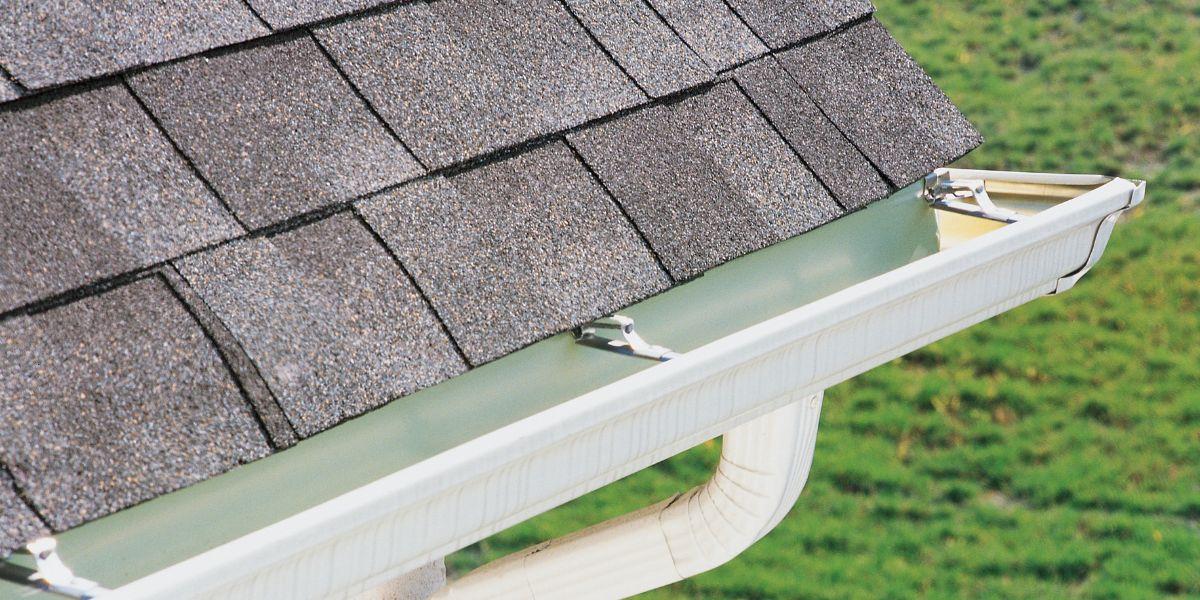
Gutters collect runoff from your roof and direct it through downspouts away from your home's foundation, fascia, siding, and landscaping — and when they fail, every one of those systems pays the price.
Most homeowners think of gutters as a cosmetic feature. They are not. They are the drainage layer between your roof and your home's structural components. Every rainstorm, every snowmelt, every spring thaw sends water off your roof. Without a functioning gutter system, that water lands at the base of your walls, saturates the soil against your foundation, wicks behind your fascia boards, and works its way under your shingles at the roof edge.
The damage from failed gutters rarely announces itself immediately. Fascia rot develops behind the gutter where you cannot see it. Foundation saturation shows up as basement moisture months after the problem starts. Roof edge deterioration appears as missing granules or lifted shingles long after the water damage began.
Gutters are not glamorous. But replacing a foundation drainage system or repairing rotted fascia costs far more than a new gutter installation. The system earns its price by quietly doing its job every time it rains.
Why Northeast Ohio Is Harder on Gutters Than Most Places
Northeast Ohio's combination of lake-effect snow, hard freeze-thaw cycling, and heavy spring rainfall creates gutter stress conditions that most of the country simply does not experience.
According to the Great Lakes Integrated Sciences and Assessments (GLISA) at the University of Michigan (glisa.umich.edu), Summit, Stark, Portage, and Medina counties average more than 40 freeze-thaw cycles per winter. Each cycle expands water trapped in gutters, stresses hanger attachments, widens any existing seam gaps, and adds cumulative load to the fascia. National Weather Service Cleveland data (weather.gov/cleveland) puts Akron's average annual snowfall at approximately 42 inches — meaning gutters here carry ice and snow loads that southern and western Ohio homeowners rarely encounter.
The housing stock makes this worse. Akron neighborhoods like Kenmore, Firestone Park, and Highland Square are lined with postwar homes built in the 1940s and 1950s, many sitting under mature urban canopies of red maple, pin oak, and sycamore that were saplings when the houses were new. Those trees now drop heavy seed volume in late April and May and full leaf loads in October and November — directly into gutters that are themselves 30 to 70 years old in many cases.
Canton's Lincoln Way corridor and the older neighborhoods surrounding downtown show the same pattern.
Three specific conditions drive accelerated gutter wear in this region:
- Freeze-thaw cycling. Water trapped in gutters overnight freezes, expands, and puts outward pressure on seams and hanger brackets. Forty-plus cycles per winter means forty-plus rounds of stress on every joint and fastener in the system.
- Heavy debris load. Northeast Ohio's mature urban tree canopy drops heavy leaf volume in fall and seeds in spring. Clogged gutters trap standing water, which then freezes and compounds the ice load problem.
- Lake-effect accumulation. Snow events from Lake Erie can deposit several inches overnight. That weight, added to existing ice, exceeds what gutter systems designed for milder climates are built to handle.
A gutter system in Northeast Ohio needs to be sized, installed, and maintained with these conditions in mind — not to the national average.
Seamless vs. Sectional: Why It Matters Here
Seamless gutters are fabricated on-site as a single continuous run with no mid-span joints, while sectional gutters are assembled from pre-cut pieces connected at seams — and in Northeast Ohio's freeze-thaw conditions, those seams are where systems fail first.
Sectional gutters are sold in standard lengths and assembled on-site with connectors. Every joint is a potential failure point. Caulk and sealant hold the seams together initially, but freeze-thaw cycling works at those connections relentlessly. Within a few winters, seams begin to separate, leak, and allow water to run directly down the fascia instead of into the downspout.
Seamless gutters eliminate that failure mode. A portable gutter machine fabricates each run to the exact length of your roofline on-site, with joints only at corners and downspout connections. There are no mid-span seams to fail.
For Northeast Ohio homeowners, this distinction is not a minor upgrade — it is the difference between a system that handles the region's conditions and one that deteriorates within a few years of installation.
For a deeper look at why seamless systems outperform sectional alternatives, see Benefits of Seamless Gutters.
5-Inch or 6-Inch: How to Choose the Right Size
Gutter size should be matched to your roof's square footage, pitch, and the speed at which water leaves the surface — not defaulted to whatever came on the house originally.
Most homes in Northeast Ohio were built with 5-inch gutters. That size is adequate for many homes, but it is not the right answer for every roof.
5-inch gutters hold approximately 1.2 gallons of water per linear foot. They are the standard residential size, cost less than 6-inch systems, and handle moderate roof areas and pitches reliably. If your roof is smaller, has a gentle pitch, and you have not experienced overflow during heavy storms, 5-inch is likely the right fit.
6-inch gutters hold approximately 2.0 gallons per linear foot — roughly 67% more capacity. That additional capacity matters when:
- Your roof is large or has a steep pitch that accelerates runoff
- You have long gutter runs with limited downspout outlets
- Your roof includes metal sections, dormers, or valleys that concentrate flow
- You have experienced overflow or fascia staining during heavy spring rainstorms
In Northeast Ohio's spring storm season, when an inch of rain can fall in under an hour, the difference in capacity becomes real. TK Roofing and Gutters installs both sizes and assesses which is appropriate for your specific roof during the estimate process.
What Proper Gutter Installation Requires
A properly installed gutter system requires correct pitch toward each downspout, adequate hanger spacing for local snow and ice loads, downspout placement sized to the run length, and proper integration with the roof's drip edge.
These are the installation details that determine whether a gutter system lasts 20-plus years or starts pulling away from the fascia within five.
Pitch
Gutters must slope toward each downspout at a rate of approximately one quarter inch per 10 feet of run. Too flat and water pools, adding weight and feeding ice formation. Too steep and water rushes past the downspout outlet during heavy rain. On runs longer than 40 feet, the gutter should pitch from the center toward downspouts at both ends.
Hanger spacing
National installation guidelines recommend hangers every 24 to 36 inches. In Northeast Ohio, where gutters routinely carry ice loads through 40-plus freeze-thaw cycles, hangers should be spaced every 18 to 24 inches. The tighter spacing distributes the structural load of ice more evenly and prevents the bracket fatigue that causes sagging.
Downspout placement
A downspout should serve no more than 20 to 40 feet of gutter run. Longer runs need a second outlet. Downspout extensions should direct water at least four feet from the foundation.
Drip edge integration
The back lip of the gutter must sit below the roof's drip edge so water flows off the drip edge and into the gutter — not behind it. Water behind the gutter saturates the fascia and triggers rot that goes undetected for years.
For more on what a gutter installation estimate should include, see Understanding Roofing Estimates and Contracts.

Gutter Maintenance: What to Do and When
Gutters in Northeast Ohio should be cleaned at minimum twice per year — once in late spring after tree seed drop and once in late fall after the last leaves are down — with a visual inspection each time for slope, hanger condition, and fascia integrity.
Twice yearly is the baseline. Homes with heavy tree coverage — mature maples or oaks directly overhanging the roofline — may need a third cleaning in early spring. In Northeast Ohio, late May is typically when maple seed drop finishes and a spring cleaning becomes effective.
What to check during each cleaning:
- Debris clearance. Remove all leaves, seeds, and compacted material from the gutter trough and from downspout inlets.
- Slope verification. Run water through the system with a hose. It should flow smoothly toward the downspout without pooling. Standing water after flushing means the pitch has shifted — usually from a loosened hanger.
- Hanger and bracket condition. Look for hangers that have pulled away from the fascia, bent brackets, or sections that have shifted out of alignment.
- Fascia inspection. Press gently on the fascia behind the gutter at multiple points. Soft spots indicate rot — a problem that must be addressed before new gutters can be secured properly.
- Downspout flow. Confirm downspouts are clear and water exits at ground level flowing away from the foundation.
For a full cleaning schedule and what to look for each season, see How Often Should You Clean Your Gutters?
Gutter Guards: What Works in Ohio and What Does Not
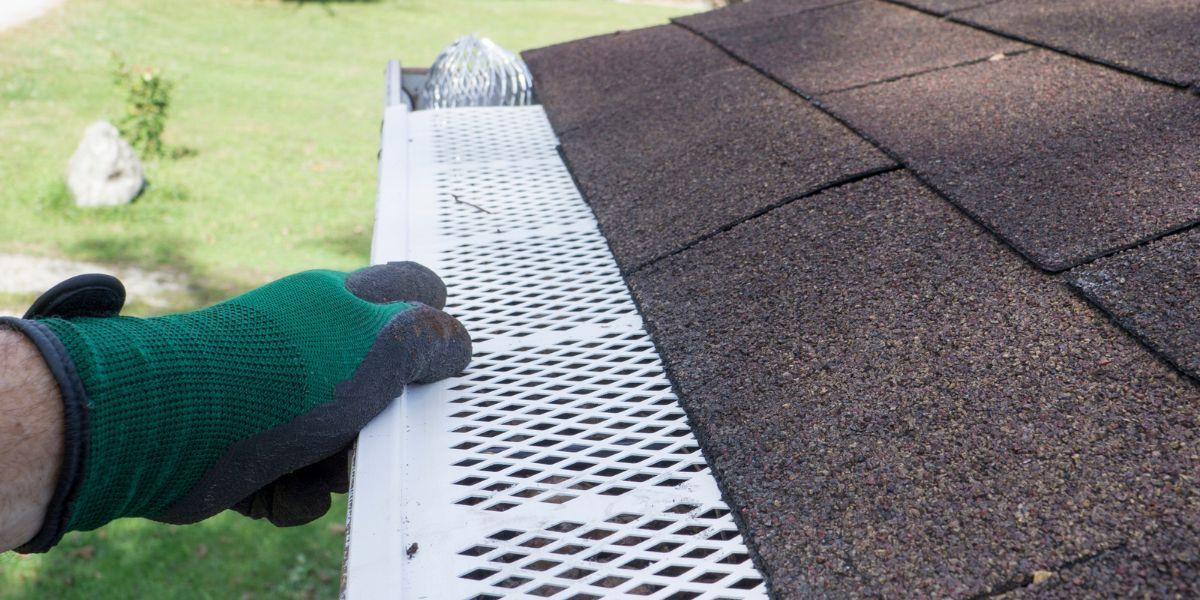
Gutter guards extend maintenance intervals and reduce debris accumulation, but in Northeast Ohio the wrong guard type traps ice and compounds winter drainage problems rather than solving them.
This is where the "set it and forget it" marketing promise breaks down. The right guard in Ohio is a genuine maintenance improvement. The wrong one creates new problems.
Guards that work reasonably well in Ohio conditions:
- Micro-mesh guards with a solid top and fine stainless mesh filter debris while allowing water to pass. They handle leaf volume well and are less prone to ice bridging than screen-type guards.
- Solid cover or reverse-curve guards direct water into the gutter while shedding debris over the edge. Performance varies by brand and installation quality — steep roofs can cause water to overshoot the curve entirely.
Guards that tend to underperform in Ohio winters:
- Foam inserts trap moisture at the foam surface, which freezes in the gutter trough and can accelerate ice dam conditions.
- Basic screen guards collect wet debris on top, which freezes as a sheet and blocks drainage entirely during hard freeze events.
No guard eliminates maintenance completely. In Ohio, expect to clean even a guarded system at least once a year and inspect annually for ice damage to the guard itself. The value is in reducing frequency, not eliminating the task.
Signs Your Gutters Need to Be Replaced
Gutters should be replaced when they show persistent sagging, fascia rot, pulling away from the roofline, repeated seam failures, or water consistently pooling at the foundation — regardless of age.
Age alone does not determine replacement timing. A well-installed seamless aluminum system maintained properly can last 20 to 30 years. A poorly installed sectional system can fail in a fraction of that time. Watch for these specific signals:
- Sagging or pulling away from the fascia. This means hangers have failed, the fascia behind them has rotted, or both. Re-fastening alone does not solve a rotted fascia — the wood must be repaired before new gutters can be secured.
- Persistent leaking at seams. On sectional systems, seams that keep leaking after repair indicate the system has reached the end of its useful life.
- Rust, cracks, or visible holes. Even small openings allow water to run directly down the exterior wall. In Ohio winters, those openings expand as water freezes and thaws in the crack repeatedly.
- Water staining on siding or fascia. Staining below the gutter line means water has been overflowing or leaking consistently — often for longer than the homeowner realizes.
- Foundation pooling or basement moisture. If water pools against your foundation after every rain, your gutters are either clogged, pitched incorrectly, or no longer functional.
All five signals have one thing in common: the longer they go unaddressed, the more expensive the repair becomes.
Should You Replace Gutters When You Replace Your Roof?
Replacing gutters at the same time as a roof is not always required, but it is often the most practical choice — particularly when the existing gutters are more than 15 years old, show signs of wear, or are sectional systems being replaced with seamless.
Roof replacement involves working directly at the roof-to-fascia interface — the same access point needed for gutter assessment and installation. Doing both projects simultaneously reduces total labor cost and avoids disrupting new roofing work later.
When gutters are in solid condition — properly pitched, hangers tight, no fascia damage — there is no reason to replace them with the roof. Since 2003 we have walked plenty of jobs where the gutters were fine and told homeowners exactly that. A qualified contractor should assess honestly and let the condition of the system guide the recommendation.
TK Roofing evaluates the gutter system as part of every roof inspection. If replacement makes sense at the same time, we say so. If it does not, we say that too.
Frequently Asked Questions
What is the best gutter material for Northeast Ohio weather?
Seamless aluminum is the best gutter material for Northeast Ohio because it handles freeze-thaw cycling, heavy snow loads, and spring storms better than vinyl or steel alternatives. Vinyl cracks in sustained below-zero temperatures. Steel is heavier and more prone to rust at seam points. Aluminum is lightweight, corrosion-resistant, fabricated on-site for a seamless fit, and performs reliably through Ohio's full range of seasonal conditions.
How often should gutters be cleaned in Northeast Ohio?
Gutters in Northeast Ohio should be cleaned at minimum twice per year — once in late spring after tree seed drop and once in late fall after leaves are down. Homes with heavy maple or oak canopy directly over the roofline may benefit from a third cleaning in early spring. Each cleaning should include a slope check and hanger inspection, not just debris removal.
What is the difference between 5-inch and 6-inch gutters?
A 5-inch gutter holds approximately 1.2 gallons of water per linear foot, while a 6-inch gutter holds approximately 2.0 gallons — roughly 67% more capacity. The right size depends on your roof's square footage, pitch, and run length. Homes with large or steep roofs, long gutter runs, or a history of overflow during heavy rain are typically better served by a 6-inch system.
Can clogged gutters damage my roof?
Clogged gutters cause water to back up at the roof edge, where it can seep under shingles, saturate the roof decking, and trigger ice dam formation in freezing temperatures. In Northeast Ohio, this connection between gutter maintenance and roof health is direct and consequential. A clogged gutter in October becomes an ice dam in January, which becomes a roof leak in February. Keep them clean.
What are signs that gutters need to be replaced?
Gutters need replacement when they show persistent sagging, fascia rot behind the gutter, pulling away from the roofline, repeated seam leaks that cannot be repaired, or consistent water pooling at the foundation. Age matters less than condition. A well-maintained seamless aluminum system can last 20 to 30 years. A neglected sectional system can fail significantly sooner, particularly in Northeast Ohio's freeze-thaw conditions.
Do I need my gutters replaced when I get a new roof?
New gutters are not always required when replacing a roof, but the project is the natural time to assess condition — and replacement is practical when gutters are more than 15 years old, showing wear, or are sectional systems being upgraded to seamless. Combined projects reduce total labor cost. A qualified contractor should evaluate your existing system honestly before recommending replacement either way.
What is the rule of thumb for gutter slope?
The standard rule for gutter slope is a quarter inch of drop for every 10 feet of run, directed toward the nearest downspout. This pitch keeps water moving without pooling or overshooting the outlet. On runs longer than 40 feet, pitch from the center toward downspouts at both ends. In Northeast Ohio, correct pitch is especially critical — standing water in a flat gutter becomes ice in the trough by January.

The Right Gutters Make Every Ohio Winter Easier
Gutters are not complicated. But in Northeast Ohio, getting them right requires more than picking a color and calling a contractor.
Forty-plus annual freeze-thaw cycles, 42 inches of average snowfall, and spring storms that can drop an inch of rain in an hour mean that sizing, installation precision, and maintenance timing all matter more here than national averages suggest. Seamless aluminum construction, correct pitch, tighter hanger spacing, and twice-yearly cleaning are not premium upgrades for this region. They are the baseline for a system that actually protects your home.
TK Roofing and Gutters installs 5-inch and 6-inch seamless gutter systems across Northeast Ohio — Akron, Canton, Cuyahoga Falls, Wadsworth, Hudson, and surrounding communities. We assess your roof's drainage needs during the estimate process, fabricate your gutters on-site for an exact fit, and clean up after every job with the same double magnet sweep we run after every roof we install. Every gutter installation is backed by a 15-year workmanship warranty. That is the TK Promise.
For more on working with a contractor you can trust, see Hiring a Roofing Contractor in Northeast Ohio: The Complete Guide.
Call us at 330-858-2616 for your free inspection.

Call Us
(330) 858-2616
Email Us
info@tkroofingandgutters.com
Visit Our Office
3256 South Main St. Akron, Ohio 44319

Hours
9am - 5pm
Monday to Friday
Closed Holidays
Monday to Friday
Closed Holidays
Related Posts
 Should I Replace My Gutters When I Replace My Roof?
Not every roof replacement needs new gutters. Learn when age, spike-and-ferrule hardware and drip edge geometry make replacing both the smarter call.
Read Article
 Do Gutter Guards Really Work?
Gutter guards block debris, eliminate ladder climbs, and stop water damage. Learn which protection system fits your Akron-area home from local experts.
Read Article
Search


