


How To Know If Your Roof Has Wind Damage; Signs, Inspection Steps & What To Do Next
Date Posted:
March 16, 2026
Author:
Daryl Gentry

By Daryl Gentry, Owner — TK Roofing and Gutters | Serving Northeast Ohio since 2003 | 3256 S Main St, Akron, Ohio 44319 | 330-858-2616
How To Know If Your Roof Has Wind Damage
Wind damage to a roof causes hidden structural failure that worsens with every subsequent storm, and most homeowners don't see it until a leak appears inside the house.
Northeast Ohio homeowners face some of the most punishing wind conditions in the Midwest. Derechos, severe thunderstorms, and fast-moving cold fronts regularly push gusts past 60 mph across Akron, Canton, Cuyahoga Falls, and the surrounding communities.
In March 2026, the National Weather Service recorded gusts above 70 mph at Akron-Canton Airport, strong enough to loosen sealed shingles, bend flashing, and break the adhesive sealant strips that hold asphalt shingles flat.
Knowing what to look for and where to look helps you catch wind damage before it becomes a leak, before it becomes rot, and before it becomes a much larger repair bill. This guide walks you through every sign, visible and hidden, and tells you exactly what to do next.
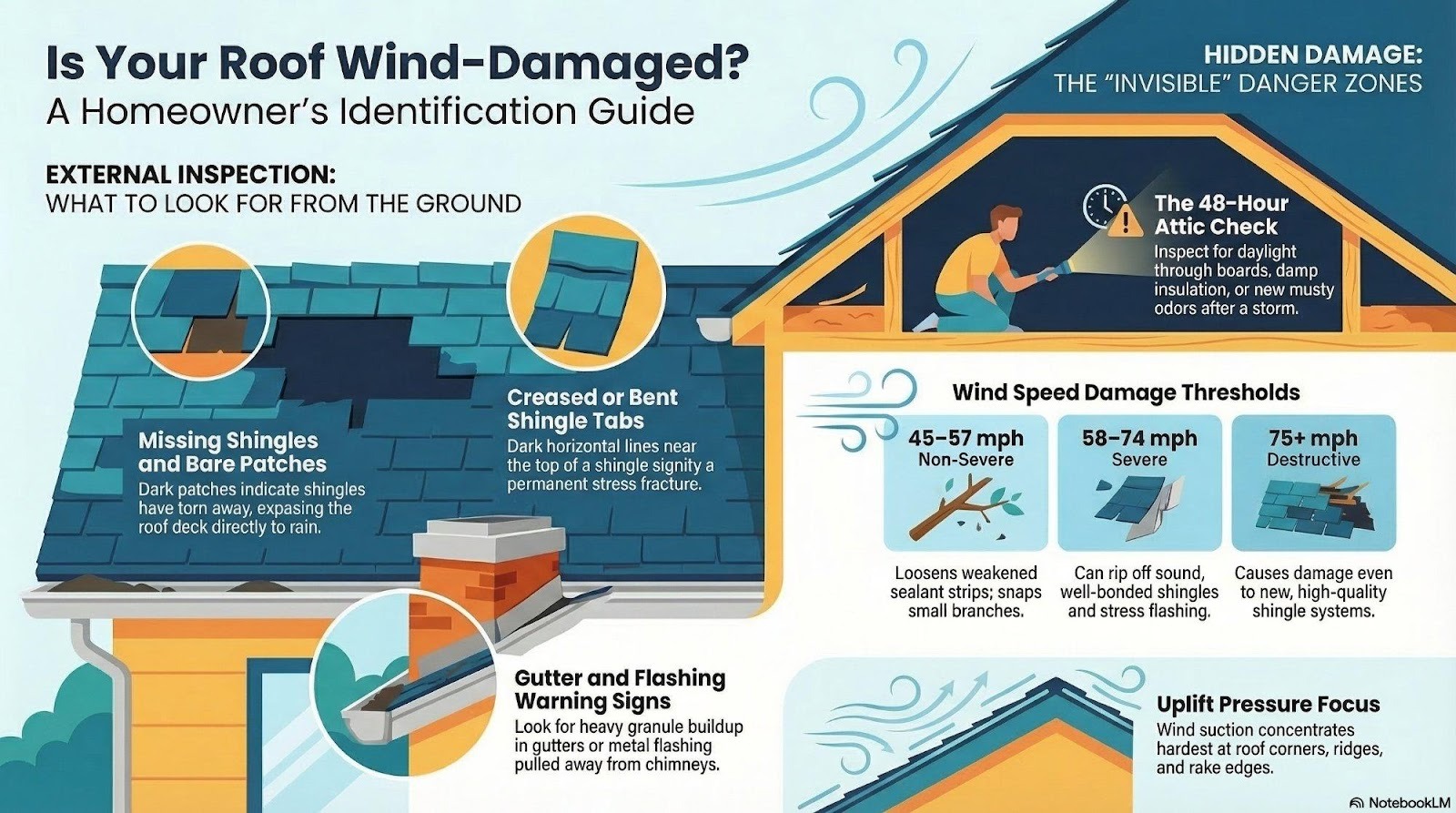
Key Takeaways: How to Know If Your Roof Has Wind Damage
- Wind causes uplift, not impact. Most wind damage hides in sealant failure, creased tabs, and loose flashing — not missing shingles.
- Inspect corners, ridges, and rake edges first. These high-pressure zones fail before the rest of the roof.
- Granule loss in gutters is an early warning sign that surface erosion has begun and roof life is shortening.
- Attic inspection reveals leaks days before they reach your ceiling — check within 48 hours of a major storm.
- Document with date-stamped photos and weather reports immediately after any storm with gusts above 55 mph.
- Northeast Ohio sits in a primary derecho corridor. Straight-line wind damage affects entire neighborhoods at once — a professional inspection confirms what the street view misses.
Why Wind Damages Roofs Differently Than Other Storms
Wind damages a roof through uplift pressure and suction force, not direct impact, which is why roof wind damage is harder to identify than hail or falling debris.
When the wind sweeps across your home, it doesn't just push from one side. It creates suction along the roof edges, corners, and ridge, pulling upward against the shingle tabs and working against the adhesive sealant strip that bonds each shingle to the course beneath it.
Uplift pressure concentrates hardest at roof corners and rake edges, exactly the areas homeowners rarely see clearly from the driveway.
Straight-line winds, derechos, and severe thunderstorm gusts are the primary wind threats in Northeast Ohio. According to the NOAA Storm Prediction Center, over half of all severe wind damage reports nationally come from thunderstorm straight-line winds, not tornadoes.
The June 2022 derecho that swept through Wooster and Holmes County produced estimated gusts of 80–94 mph, tearing roofs and snapping trees across the region. That's a wind event most shingle systems aren't designed to survive without at least some sealant damage.
Age makes this worse. As asphalt shingles age, the adhesive bond of the sealant strip degrades. A shingle that passed its manufacturer's wind rating when it was new may only handle half that load after a decade of freeze-thaw cycles.
Northeast Ohio's climate, with its 40 to 50 annual freeze-thaw cycles, accelerates this process faster than roofs in warmer regions.
The Visible Signs of Wind Damage on a Roof
The most reliable visible signs of wind damage, missing shingles, displaced tabs, and bare roof patches, are identifiable without climbing a ladder, using only a ground-level inspection with binoculars.
After any significant wind event, walk the full perimeter of your home before you do anything else. Here's what each sign means and what to look for.
Missing Shingles and Bare Patches
Missing shingles are the clearest sign of wind damage. When wind breaks a sealant bond and lifts a shingle tab past its breaking point, the shingle tears away, sometimes pulling part of the shingle mat with it.
What to look for:
- Bare dark patches on the roof surface where granules and shingle material used to be
- Shingle tabs scattered in the yard, gutters, or driveway after a storm
- Exposed dark underlayment or roof decking visible from the ground
- Multiple missing shingles clustered in the same area — a sign that neighboring shingles have weakened seals and will fail in the next storm
Creased or Bent Shingle Tabs
A shingle crease forms when wind lifts a shingle and bends it past its flex point, creating a stress fracture in the asphalt mat beneath the granule surface. A physical crease is definitive evidence of wind damage; it cannot appear without a bending force.
Creased shingles are still attached but no longer provide waterproofing protection.
What to look for:
- A dark horizontal line running across a shingle tab, typically near its upper third
- A fold line or shadow visible when you view the roof at a slight angle
- Most visible in raking light — morning or late afternoon sun across the roof face
Granule Loss and Gutter Buildup
Asphalt shingles are coated with protective granules that shield the mat from UV degradation and water.
Wind and wind-driven debris scrape granules loose. Significant granule accumulation following a single storm event indicates surface erosion and accelerated weathering, which shorten the remaining shingle life.
What to look for:
- An unusual volume of dark, sandy grit in gutters and at downspout exit points after a storm
- Shingle surfaces that look smooth, lighter in color, or shiny where granules have worn away
- More grit than you'd see after a typical rain — volume matters here
Damaged, Lifted, or Separated Flashing
Flashing is the thin metal that seals roof joints, around chimneys, vents, skylights, and valleys. High winds pry at flashing edges and can lift or bend them away from the surfaces they seal. A gap as small as a quarter-inch creates a direct water entry point, making loose flashing one of the leading causes of interior leaks after wind events.
What to look for:
- Rust streaks running down from a chimney — a sign the flashing seal has been compromised
- Metallic edges that appear raised, bent, or misaligned from their original position
- Any flashing that looks visibly pulled away from the chimney, vent, or valley surface
Gutter Damage and Separation
Gutters absorb significant lateral wind load, especially when weighted with debris. Strong gusts can pull them away from the fascia board, directing water toward your foundation or behind the siding. Sagging gutters left unaddressed accelerate damage to soffit and fascia, the structural edge of your roof system.
What to look for:
- Gutters that sag, lean outward, or appear lower on one end than the other
- Visible gaps between the gutter and the fascia board at attachment points
- Sections that have pulled completely away from the house
Debris Impact Marks
Wind-carried branches, twigs, and airborne material strike shingles and leave impact marks distinct from age-related wear. A crack in the shingle surface, even a small one, creates a water path that grows through freeze-thaw expansion.
What to look for:
- Dark spots, cracked shingle surfaces, or areas of missing granules in a concentrated, localized pattern
- Larger indentations or split shingles where branches made direct contact
- Debris is still sitting on the roof — note its location for a professional
Visible vs. Hidden Wind Damage: What the Full Picture Looks Like
Wind damage exists on a spectrum, with visible problems you can identify from the ground, and hidden damage that requires a professional inspection to find.
Use this reference after any significant storm. If you find multiple items in the visible column, it's very likely that hidden damage exists too.
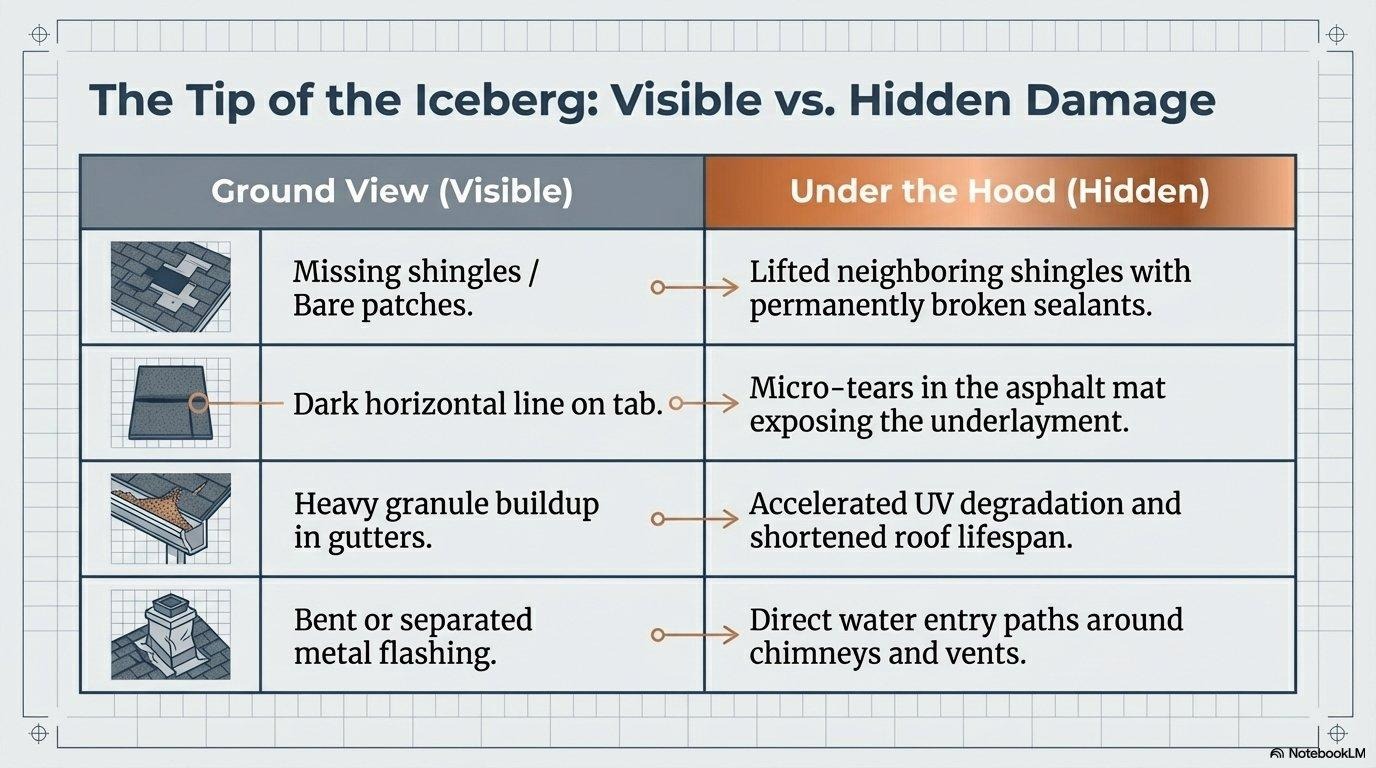
Visible Wind Damage (Ground-Level)
Hidden Wind Damage (Needs Pro Eyes)
Missing shingles — bare patches on the roof surface
Lifted shingles still in place with broken sealant
Shingle tabs in the yard, gutters, or driveway
Creased shingle tabs — horizontal stress fracture
Bent, lifted, or separated flashing
Micro-tears in the asphalt shingle mat
Granule buildup in gutters and downspouts
Compromised underlayment beneath shingles
Sagging or detached gutters
Unsealed shingle edges — water entry with the next rain
Debris impact marks on the shingle surface
Attic moisture, damp insulation, water stains on rafters
Signs of Wind Damage Inside Your Home: The Attic Inspection
Your attic reveals water infiltration, damp insulation, and leak paths that won't show through to your ceiling for days or weeks after a storm, making it the most important post-storm inspection point in your home.
Go into your attic within 24–48 hours of a significant wind event. Bring a flashlight and check for these four indicators:
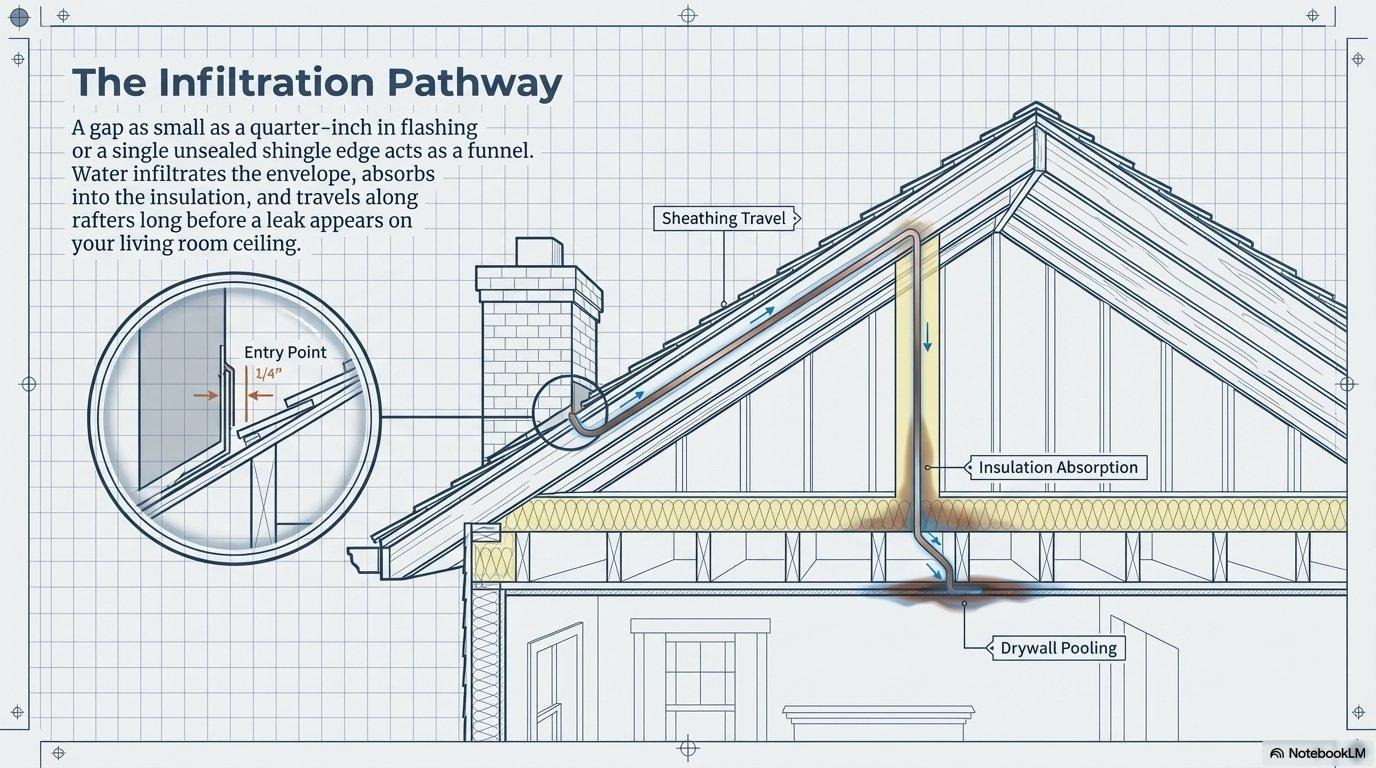
- Daylight through the roof deck. Any visible light between boards or through sheathing means a shingle is missing or a gap has opened at a seam or penetration. This needs attention before the next rain.
- Damp insulation near the eaves or around penetrations. Compressed, darkened, or musty-smelling insulation is a direct indicator of active infiltration — even if the ceiling below looks dry.
- Water stains on rafters or sheathing. Fresh stains are darker and may still be damp; older stains fade to tan or yellow. Both matter for insurance documentation — fresh stains prove the damage is recent.
- Musty or mildew odor where there was none before. A new musty smell after a wind event is an early warning that moisture is present before it becomes visible mold. Attic moisture, damp insulation, and water stains together form a strong documentation package for any insurance claim.
How to Safely Inspect Your Roof From the Ground
A careful ground-level inspection using binoculars covers the most critical evidence a homeowner needs, without the safety risks of climbing a storm-compromised roof.
Most roofing professionals, including our crew at TK Roofing and Gutters, ask homeowners not to climb their own roofs after a storm.
Wind-loosened shingles are slippery, and hidden structural damage may have compromised load-bearing points you can't see. Follow these steps from the ground:
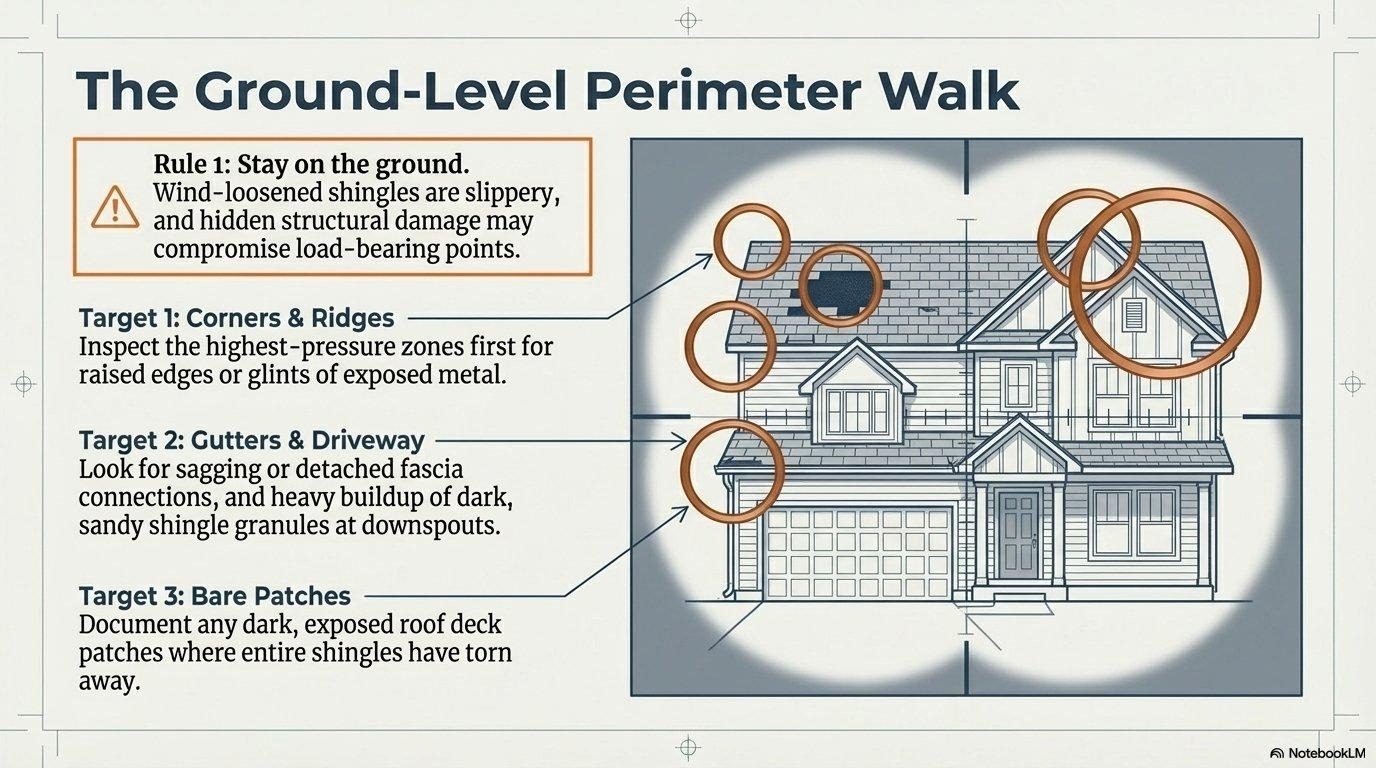
- Use binoculars from the street. Walk to the far edge of your property and scan each roof plane. Look for dark horizontal lines (creases), uneven shingle alignment, bare spots, raised edges, or glints of exposed metal.
- Inspect all four sides. Wind doesn't always strike from one direction. Walk the full perimeter and check every slope — including lower sections visible from a deck or second-floor window.
- Check corners, ridges, and rake edges first. These are the highest-pressure zones in any wind event and fail before the rest of the roof.
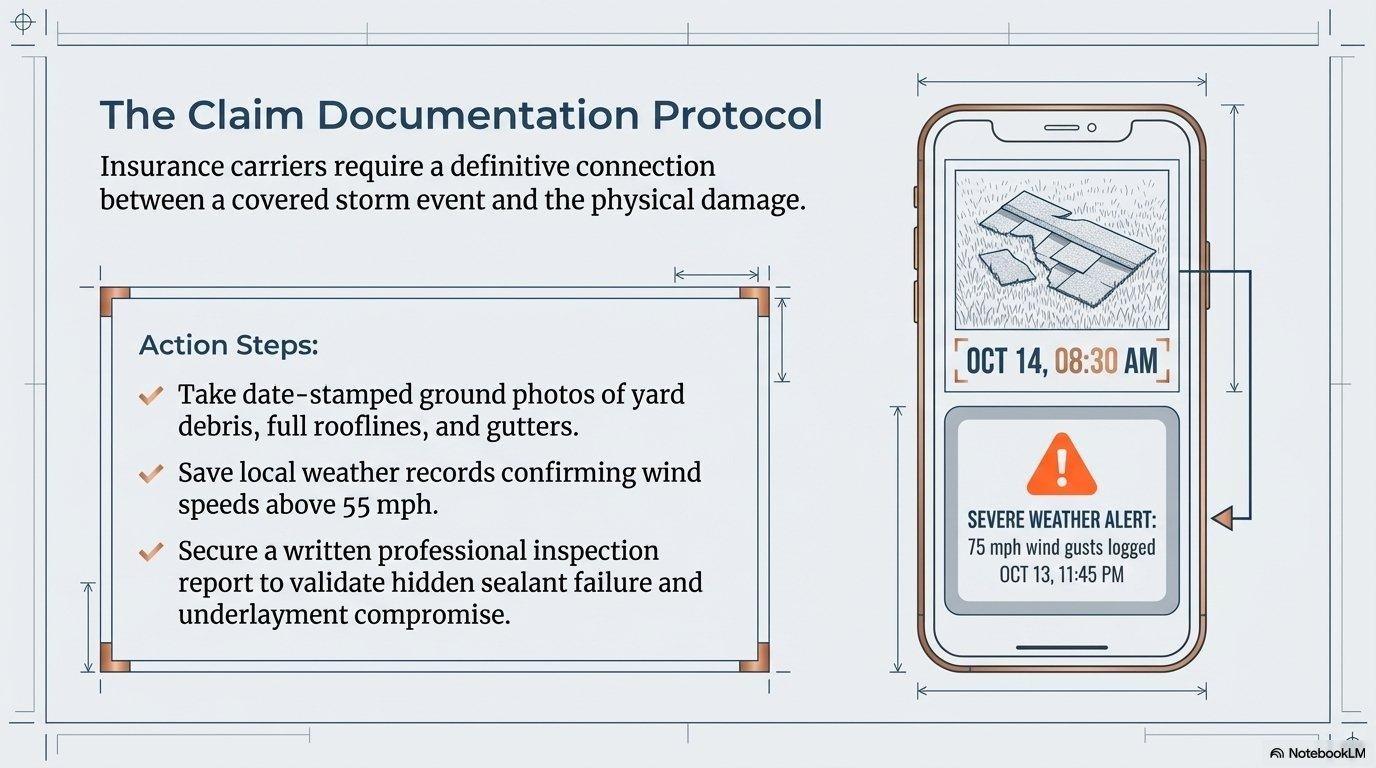
- Document everything with date-stamped photos. Photograph your gutters, yard debris, any shingles on the ground, and the full roofline from each corner. Insurers require proof the photos were taken close to the storm event.
- Save weather reports from that date. Save local weather data showing wind speeds in your area. This connects your documented damage to a specific covered weather event — critical for any insurance claim.
What Wind Speeds Actually Damage Northeast Ohio Roofs
Winds between 45 and 57 mph begin damaging older or weakened asphalt shingles, while gusts above 58 mph can tear sound shingles off a well-maintained roof, wind speeds Northeast Ohio homeowners should expect several times each year.
Understanding the thresholds helps you decide after a storm whether an inspection is warranted:
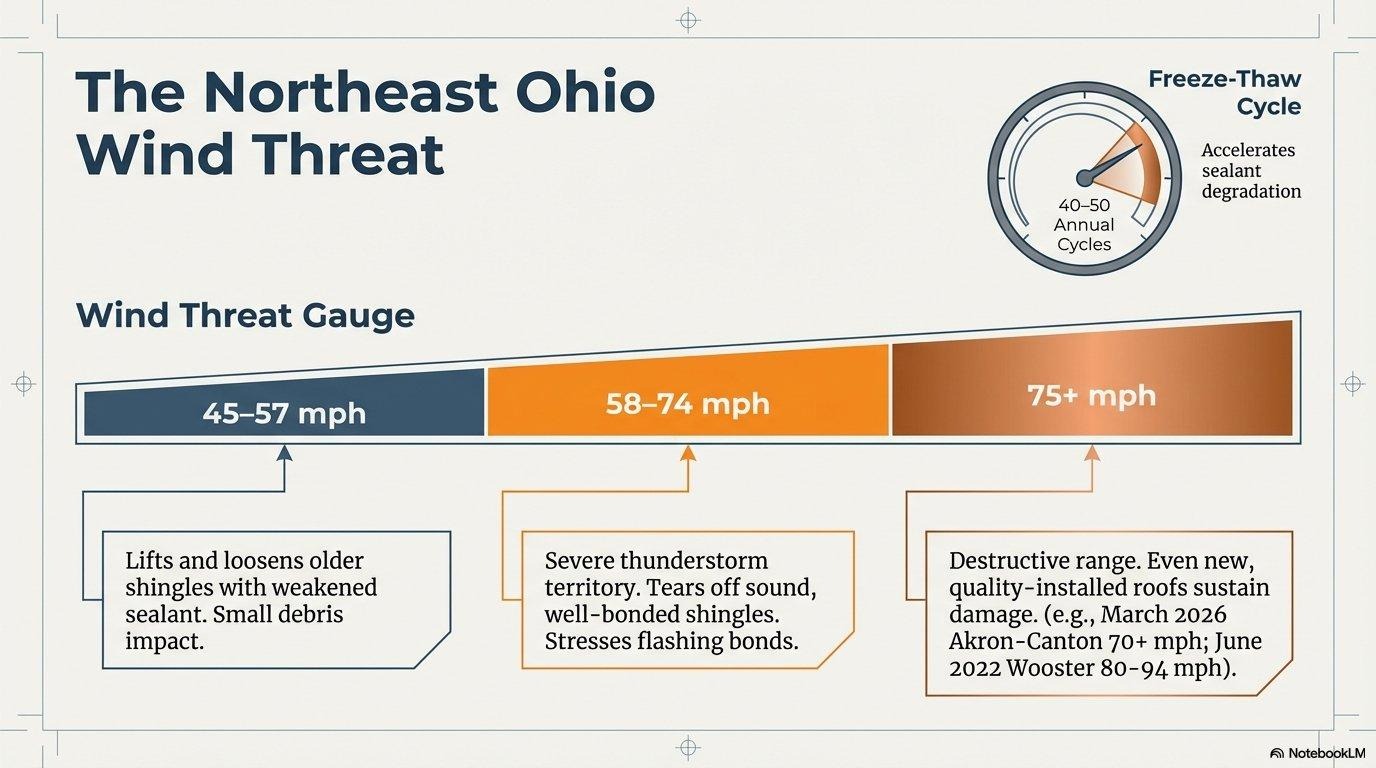
- 45–57 mph: Considered "non-severe" by meteorological standards, but enough to lift and loosen shingles with weakened sealant strips, and to snap small branches into the roof surface.
- 58–74 mph: Severe thunderstorm wind territory. Sound, well-bonded shingles can be ripped off at these speeds. Flashing bonds are stressed, and ridge caps are at risk.
- 75+ mph: Destructive wind range. Even new, quality-installed shingle roofs see damage at this level. Northeast Ohio recorded multiple events with gusts in this range in 2022, 2025, and 2026.
Northeast Ohio sits in the heart of the Ohio Valley derecho corridor, one of the two primary derecho pathways in the United States. These straight-line wind events produce widespread, uniform damage across entire neighborhoods, unlike tornadic damage, which cuts a narrow path.
That means if one house on your street had shingles torn off, there's a meaningful chance yours did too, even if it looks fine from the street.
When to Call a Professional Roofer for a Wind Damage Inspection
A professional roof inspection determines the full scope of wind damage, including the hidden sealant failure, underlayment compromise, and flashing separation that a ground-level survey cannot reveal.
If you've found one or more signs from the visible damage list above, or if your home sits in an area that saw gusts above 55 mph, a professional inspection is the right next step.
A licensed contractor can assess sealant strip integrity, nail pull-through patterns, and the condition of the roof deck beneath the shingles. For insurance purposes, a professionally written inspection report carries far more weight than homeowner photos alone.
At TK Roofing and Gutters, we have been inspecting, repairing, and replacing roofs across Northeast Ohio since 2003. We are a family-owned roofing company built on the principle that homeowners in Akron, Canton, Massillon, Hudson, Cuyahoga Falls, and the surrounding communities deserve certified work at prices that don't punish them for choosing quality.
Our certifications and credentials:
- GAF Certified Plus
- CertainTeed Select ShingleMaster
- Owens Corning c
- 20-year workmanship warranty, the longest offered in the industry
- BBB Accredited, A+ rating
Free inspections. Honest assessments. No-pressure explanations. That's the TK Promise.
Call (330) 858-2616 to schedule your free inspection.
Frequently Asked Questions
How much wind does it take to damage a roof?
Winds between 45 and 57 mph can begin lifting and loosening weakened asphalt shingles, while gusts above 58 mph can tear sound, well-bonded shingles off a maintained roof.
Shingle age matters significantly; a 15-year-old roof with degraded sealant strips may fail at speeds well below these thresholds. Northeast Ohio regularly records gusts in the 60–85 mph range during severe thunderstorm events and derechos, making post-storm inspections a practical necessity for most homeowners in the region.
Can a roof have wind damage without any missing shingles?
Yes, wind damage frequently occurs without any shingles going missing, and this hidden damage is often more dangerous than missing shingles because it goes unnoticed longer.
Lifted shingles with broken sealant bonds, creased shingle tabs, and loosened flashing are all forms of wind damage that leave shingles physically in place while eliminating their waterproofing function. A roof that looks intact from the street can have dozens of compromised shingles that will admit water with the next rain.
What does a wind damage crease look like on a shingle?
A wind damage crease appears as a dark horizontal line running across a shingle tab, typically in the upper third of the exposed surface, caused by the shingle being physically bent and stress-fractured by wind uplift.
It looks like a fold line or shadow when viewed at a low angle, particularly in raking morning or late-afternoon light. The dark coloring comes from the fractured asphalt mat beneath the granule surface. Wind engineers classify a physical crease as definitive evidence of wind damage because it cannot form without a bending force, unlike granule loss or sealant failure, which can have other causes.
How do I document roof wind damage for an insurance claim?
To document roof wind damage for an insurance claim, take date-stamped photos from the ground immediately after the storm, save local weather records showing wind speeds, inspect your attic for moisture within 48 hours, and get a written professional inspection report from a licensed contractor.
Insurance carriers require a clear connection between a specific covered storm event and the damage you're claiming. A professional contractor experienced in working with insurance adjusters, like TK Roofing and Gutters, can prepare documentation in the exact format insurers require, which significantly improves claim outcomes.
Start With What You Can See; Then Dig Deeper
Wind damage is manageable when you catch it early. The inspection starts with a walk around your home.
Here's what to do in the first 48 hours after any significant wind event:
- Walk the yard — check for shingle tabs on the ground, in gutters, or on the driveway
- Scan the roofline with binoculars from the street — look for bare patches, creases, and raised flashing
- Check gutters for granule buildup at downspout exits
- Go into your attic — look for daylight, damp insulation, and water stains on rafters
- Take date-stamped photos of everything you find
These steps take less than 30 minutes and can prevent thousands of dollars in water damage down the line.
When you see something, or when you're simply not sure, TK Roofing and Gutters is here to help. We've inspected, repaired, and replaced roofs across Akron, Canton, Massillon, Cuyahoga Falls, Bath, Hudson, and the surrounding Northeast Ohio communities for over 20 years.
As a family-owned company with GAF Certified, CertainTeed Select ShingleMaster, and Owens Corning credentials, we deliver certified, professional, and reliable work at prices typically lower than our competitors.
Free inspections are always part of how we work. No pressure, no obligation.
Call (330) 858-2616 to schedule your free inspection.

Call Us
(330) 858-2616
Email Us
info@tkroofingandgutters.com
Visit Our Office
3256 South Main St. Akron, Ohio 44319

Hours
9am - 5pm
Monday to Friday
Closed Holidays
Monday to Friday
Closed Holidays
Related Posts
 How Do I Tell If a Roofer Is Pushing Replacement When Repair Is Enough?
Learn the four tests that separate a legitimate replacement recommendation from scope inflation, and why who pays your roofer matters as much as what they find.
Read Article
 My Roof Is 15 Years Old and I Have One Leak: Repair or Replace?
A single leak at 15 years usually traces to failed flashing, not a dying roof. Here is how Akron homeowners can tell repair from replacement with confidence.
Read Article
Search


